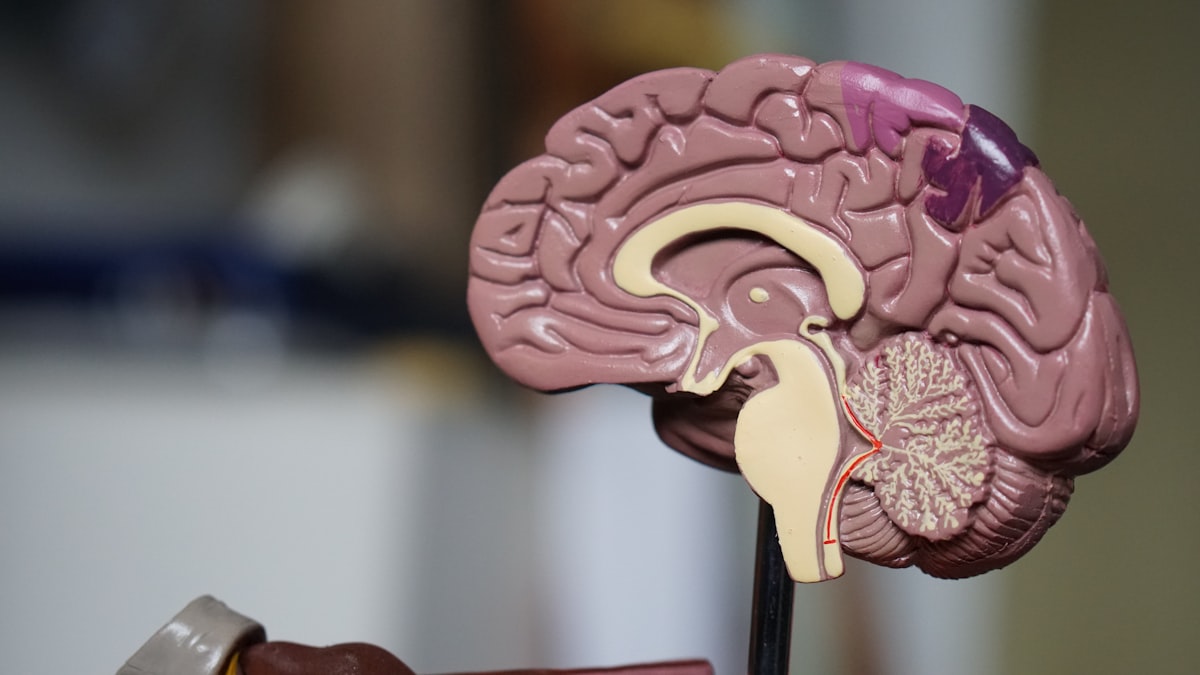
Your "germaphobe friend" stereotype of OCD is fundamentally wrong. Obsessive-Compulsive Disorder isn't just about needing a spotless counter or a perfectly aligned bookshelf. Beneath the surface of neatness lies a complex battle with intrusive thoughts—unwanted, distressing mental intrusions that drive compulsive behaviors. Understanding this distinction is the first step toward true recovery.
What are those "intrusive thoughts" really like, and how does the brain process them?
When we talk about OCD, we are talking about a pattern of unwanted, persistent thoughts, images, or urges - these are the "obsessions" - that cause significant anxiety. These thoughts are not just passing worries; they feel alien, intrusive, and often bizarre or disturbing. It's crucial to understand that having an intrusive thought does not mean you want to act on it, or that it reflects your true beliefs or desires. One way researchers have studied this is by looking at meta-awareness, which is essentially being aware of your own thoughts as just thoughts, rather than facts. For example, studies examining meta-awareness of intrusive thoughts related to trauma have shown that simply recognizing the thought as a mental event, rather than a reflection of reality, can be a powerful first step in managing the distress (Takarangi et al., 2012). These thoughts can latch onto fears about contamination, harm to loved ones, or taboo subjects, creating a cycle of anxiety.
The cycle gets worse because the brain tries to neutralize the anxiety caused by these thoughts. This neutralization takes the form of "compulsions" - repetitive mental acts (like counting or reviewing memories) or physical actions (like checking locks or washing hands). These compulsions provide temporary relief, which actually reinforces the cycle, teaching the brain that the compulsion was necessary to survive the anxiety. From a neurobiological standpoint, OCD involves dysregulation in specific brain circuits. Goodman et al. (2021) (review) provided a helpful overview, suggesting that understanding the interplay between brain chemistry and function is vital for treatment. They point to the need to harmonize our understanding of the brain's wiring with the best available treatments. This suggests that OCD isn't just a matter of willpower; it involves measurable differences in how brain regions communicate.
Furthermore, the experience of OCD can vary significantly across genders. In fact, some meta-analytic reviews suggest that women may face a higher risk of developing OCD compared to men (Fawcett et al., 2020). This highlights that the presentation and risk factors are not uniform across the population. The core challenge, therefore, is breaking the link between the initial intrusive thought and the subsequent compulsive response. This is where Exposure and Response Prevention (ERP) comes in. ERP is a type of Cognitive Behavioral Therapy (CBT) that directly confronts the fear without allowing the usual coping mechanism - the compulsion - to take over. In ERP, you are deliberately exposed to the trigger (the thought or situation) and then you are taught to resist the urge to perform the ritualistic behavior. This process, while incredibly difficult and anxiety-provoking at first, retrains the brain to realize that the anxiety, while intense, is temporary and survivable without the compulsion.
It's important to remember that the thoughts themselves are often the problem, not the content. The distress comes from the certainty the person feels they must achieve through rituals. The literature suggests that understanding the functional impact of these thoughts - how they dictate daily life - is key (Tyler & Terkel, 1975). The goal isn't to eliminate thoughts entirely, which is impossible, but to change the emotional and behavioral relationship with them. By repeatedly facing the anxiety without the safety net of the compulsion, the brain slowly learns that the perceived danger level was an overreaction, leading to a reduction in the obsessive-compulsive cycle.
How does ERP actually help rewire the brain's response to anxiety?
The mechanism by which ERP works is fundamentally about habituation and extinction learning. Think of it like this: if you keep ringing a fire alarm every time a small pot boils over, eventually, the alarm becomes less alarming, even if the pot boiling over is still a minor event. ERP does something similar for the brain's alarm system. When you are exposed to a trigger - say, thinking about germs - and you don't perform the usual washing compulsion, your brain initially screams, "Danger! You must wash!" But because you stay in the situation without washing, and nothing catastrophic happens, the brain starts to update its threat assessment. This process of repeated, non-reinforced exposure weakens the emotional charge attached to the thought.
This process is highly structured. A therapist guides the patient to create a "fear hierarchy," ranking triggers from least scary to most scary. Treatment then systematically tackles these items, starting small. The success relies on the patient's willingness to tolerate the peak anxiety without escaping into the compulsion. The research supports that understanding the neurobiology is crucial for effective treatment (Goodman et al., 2021). ERP directly targets the faulty neural pathways that link the intrusive thought to the compulsive relief. By breaking that automatic loop, the patient gains a sense of agency over their own mental processes.
Furthermore, the ability to recognize the thought as just a thought - what we discussed earlier regarding meta-awareness (Takarangi et al., 2012) - is a cognitive skill that ERP strengthens. It moves the individual from being caught by the thought to observing the thought. This shift in perspective is incredibly empowering. It changes the internal monologue from "I must check the stove or something terrible will happen" to "I am having the thought that I might need to check the stove, but I choose not to check it right now." This cognitive distance is the bedrock of recovery.
In summary, ERP isn't just about "doing things you fear"; it's about retraining the brain's alarm system to recognize false alarms. It teaches the brain that the anxiety signal, while loud, is not an immediate signal of danger, allowing the person to live a life dictated by their values rather than by the dictates of their most persistent, unwanted thoughts.
Practical Application: Building Your ERP Toolkit
Exposure and Response Prevention (ERP) is not a one-size-fits-all manual; it is a highly personalized, skill-building process. The goal is to systematically teach your brain that the anxiety spike, while uncomfortable, is not dangerous and that the feared outcome is unlikely to occur, even if you don't perform the compulsion.
When working with a therapist, you will move through a hierarchy of feared situations or thoughts. This hierarchy rates your anxiety level (often on a Subjective Units of Distress Scale, or SUDS, from 0 to 100) for various triggers. We start low and build up. For example, if contamination is a trigger, the initial exposure might be touching a doorknob in a low-traffic area (SUDS 30). The response prevention part is crucial: you must resist the urge to wash your hands immediately afterward.
A typical session structure might look like this: Preparation (5 minutes): Reviewing the plan and setting realistic goals for the session. Exposure (20-30 minutes): Engaging directly with the trigger. For instance, touching the doorknob and then deliberately waiting 15 minutes before washing, even if the urge is screaming at you. During this time, you practice grounding techniques - deep, diaphragmatic breathing, or naming five things you can see - to manage the acute anxiety. Response Prevention (Ongoing): This is the active refusal to perform the ritual. If you usually perform a mental review of the doorknob, you must actively interrupt that thought pattern. Debriefing (10 minutes): Discussing what happened. Did the anxiety peak? Did it eventually crest and fall? This reinforces the core principle: the anxiety wave will pass.
Frequency and duration must be consistent. Initially, daily practice is often required, even if it's just 20 minutes of focused exposure. As you progress, the duration of the exposure increases, and the frequency might become less intensive but more consistent in real-world settings. Remember, the discomfort you feel during ERP is the process of retraining your brain, not a sign that you are failing.
What Remains Uncertain
It is vital to approach ERP with realistic expectations. First, ERP is not a quick fix; it is intensive cognitive and behavioral retraining that requires significant commitment. Progress is rarely linear; you will have "bad days" where anxiety feels overwhelming, and these days do not negate the progress made on good days.
Furthermore, the effectiveness of ERP is heavily dependent on the therapeutic alliance - the trust and collaboration between you and your therapist. If you feel pressured, rushed, or misunderstood, the protocol will stall. Another limitation is that ERP is most effective when the OCD is primarily behavioral or thought-based; it may need to be supplemented with other modalities, such as mindfulness techniques or medication management, depending on the co-occurring symptoms.
We must also acknowledge the unknowns. While ERP is the gold standard, research is ongoing regarding optimal pacing for highly complex or comorbid OCD presentations. For instance, determining the perfect balance between challenging the thought (cognitive work) versus simply resisting the action (behavioral work) can be highly nuanced. Furthermore, self-directed practice outside of therapy requires immense discipline; relapse is a real risk if the structured support system is removed too abruptly. Always view your therapist as a coach who guides you through the discomfort, rather than a magic cure.
Core claims are supported by peer-reviewed research. Some practical applications extend beyond direct findings.
References
- Singh A, Anjankar VP, Sapkale B (2023). Obsessive-Compulsive Disorder (OCD): A thorough Review of Diagnosis, Comorbidities, and Treatme. Cureus. DOI
- Goodman WK, Storch EA, Sheth SA (2021). Harmonizing the Neurobiology and Treatment of Obsessive-Compulsive Disorder.. The American journal of psychiatry. DOI
- Fawcett EJ, Power H, Fawcett JM (2020). Women Are at Greater Risk of OCD Than Men: A Meta-Analytic Review of OCD Prevalence Worldwide.. The Journal of clinical psychiatry. DOI
- Mellor D (2025). Supplements claiming to work like Ozempic and Wegovy are now being sold - here's what the evidence a. . DOI
- Takarangi M, Strange D, Lindsay D (2012). Meta-Awareness of Intrusive Thoughts About Trauma. PsycEXTRA Dataset. DOI
- Tyler G, Terkel S (1975). Working: People Talk about What They Do All Day and How They feel about about What They Do.. Industrial and Labor Relations Review. DOI
- Mahjani B, Bey K, Boberg J (2021). Genetics of obsessive-compulsive disorder.. Psychological medicine. DOI
- Pease Instone S (2021). Children with HIV: How they Feel About What Parents Say. . DOI