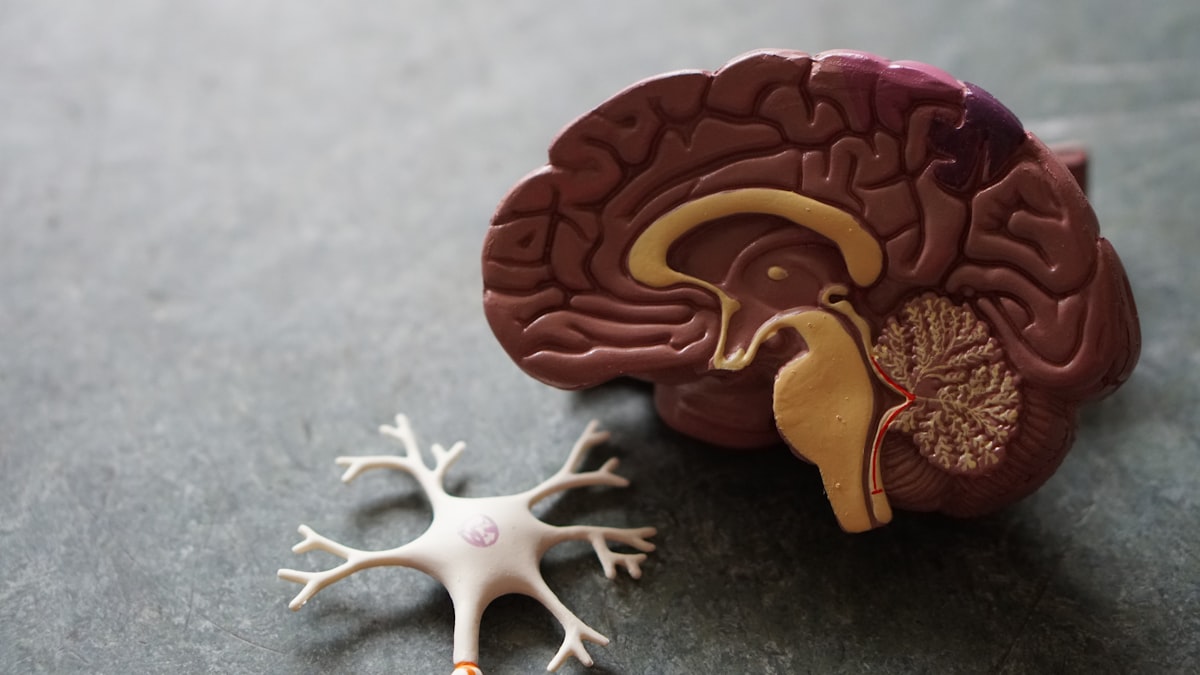
Wakefield and Horwitz (2009) argued that sadness, a fundamental human response to loss, has undergone a significant transformation in how we understand and treat it. What was once viewed as a natural, albeit painful, part of the human experience - the deep ache after saying goodbye - is increasingly being framed through a medical lens. This shift means that profound sorrow can sometimes be pathologized, turning grief into something that requires a diagnosis and, often, a specific treatment plan. It's a complex conversation that touches on culture, medicine, and what it fundamentally means to feel deeply.
How has the understanding of normal grief changed into a diagnosable condition?
The concept of grief itself is vast and deeply personal. For centuries, societies processed loss through rituals, community support, and time. However, modern psychiatry has developed sophisticated diagnostic tools, and while these tools are invaluable for identifying genuine mental health crises, they can sometimes blur the lines between normal suffering and disorder. This process is what we call medicalization - taking a natural life event and rebranding it as a medical problem needing a fix.
The academic discussion around this is quite strong. Horwitz (2019) (preliminary) has written extensively on the medicalization of grief, pointing out how the very act of naming and diagnosing grief can change how we experience it. When sadness becomes a disorder, the focus shifts from "how do I live with this loss?" to "what part of me is broken?" This framing can be incredibly isolating for the bereaved.
The clinical picture of prolonged grief disorder (PGD) exemplifies this tension. It suggests that when the acute pain of loss lingers far beyond what is considered typical, it warrants attention. Research is actively working to define the boundaries of this lingering pain. For instance, Le H (2024) conducted a systematic review looking at the prevalence of Prolonged Grief Disorder in East Asia. This kind of epidemiological work is crucial because it helps us map out how common this condition is across different populations, which is a key step in medicalizing it - establishing it as a measurable public health issue.
Another look at prevalence comes from Le H (2024) in a separate systematic review and meta-analysis concerning East Asia. These large-scale reviews help consolidate findings, giving clinicians a broader statistical picture. When multiple studies converge on a specific prevalence rate, it lends significant weight to the idea that the condition is diagnosable and treatable, which is the core mechanism of medicalization.
The treatment side of the coin is where the medicalization becomes most tangible. If something is a disorder, it must have an effective treatment. Studies are now focusing intensely on what works. For example, WU and Lai (2023) examined the effectiveness of specific grief interventions aimed at reducing the symptoms associated with Prolonged Grief Disorder. While the specific effect sizes and sample sizes aren't detailed here, the very existence of such intervention studies shows the clinical pathway: Loss happens -> Symptoms persist -> Disorder is suspected -> Intervention is prescribed.
Furthermore, the literature on psychotherapy for PGD is growing. Hao et al. (2024) (strong evidence: meta-analysis) conducted a systematic review specifically on psychotherapies for adults with prolonged grief disorder. These reviews synthesize what different types of talk therapy - Cognitive Behavioral Therapy, for example - have shown to do. By systematically reviewing multiple studies, they help establish best practices, effectively creating a standardized, medicalized protocol for dealing with profound sadness. This moves the experience from the area of personal endurance to the area of evidence-based medical care.
It is important to note that while these tools are helpful, they are tools nonetheless. They provide a language and a structure for suffering. The challenge for researchers and clinicians, as suggested by the ongoing discourse, is to use these tools to support people through normal grief while being careful not to pathologize the natural, messy, and necessary process of mourning.
What are the current clinical approaches to treating lingering grief?
The research is moving toward refining specific, evidence-based treatments for those who struggle with grief that feels stuck in time. The focus is less on just acknowledging the pain and more on actively restructuring the relationship the individual has with the loss. The systematic reviews are key here because they don't just report findings; they synthesize them to build guidelines.
Hao et al. (2024) (strong evidence: meta-analysis) provided a thorough look at psychotherapies for prolonged grief disorder in adults. By reviewing multiple studies, they help practitioners understand which therapeutic approaches - whether they are focused on acceptance, meaning-making, or emotional regulation - show the most promise. This level of synthesis is what solidifies the disorder's place within the medical model; it suggests a predictable course that can be managed with specific techniques.
Similarly, the work by WU and Lai (2023) on grief interventions underscores this clinical focus. They are testing the efficacy of structured support. If an intervention can demonstrate a measurable reduction in symptoms, it strengthens the case for the disorder being a treatable condition, rather than just a prolonged emotional state. The goal, as implied by these studies, is to give the bereaved a roadmap out of the overwhelming fog of persistent sorrow.
The prevalence data, such as that compiled by Le H (2024) in their systematic review and meta-analysis for East Asia, provides the necessary justification for these treatments. If a condition is found to be common enough across a large population (as suggested by meta-analyses), it becomes a priority for medical research and, consequently, for medical intervention. This cycle - observation, quantification, diagnosis, treatment - is the engine of medicalization.
In summary, the current body of work is highly focused on creating standardized, measurable pathways for recovery. This is a scientific achievement, offering comfort and direction to millions. However, the critical dialogue remains: at what point does the helpful structure of science become a cage for the natural, messy reality of the human heart?
Practical Application: Reclaiming Emotional Response
Shifting the model from "disorder" to "natural human response" requires active, structured intervention. The goal here is not to treat a chemical imbalance, but to build resilience and emotional literacy through consistent practice. We propose a phased, multi-modal protocol designed to re-normalize the grieving process outside the confines of diagnostic criteria.
Phase 1: Somatic Grounding (Weeks 1-2)
The initial focus must be on reconnecting the mind to the body, as grief is often experienced as a purely cognitive or emotional event, leading to dissociation. This phase requires daily commitment.
- Diaphragmatic Breathing: Twice daily (morning and evening), for 10 minutes. Inhale deeply through the nose for a count of four, hold for four, and exhale slowly through pursed lips for a count of six. Frequency: Daily.
- Mindful Movement: Daily, for 20 minutes. This should involve slow, deliberate physical activity - walking barefoot on grass, gentle stretching, or restorative yoga. The focus must remain on the physical sensation (the pull of the muscle, the feeling of the ground) rather than the emotional narrative.
Phase 2: Narrative Externalization (Weeks 3-6)
Once basic grounding is established, the focus shifts to safely processing the narrative surrounding the loss. This moves beyond simply "feeling" sad to actively "telling" the story of the loss.
- Journaling with Time Constraints: Three times per week. Set a timer for 15 minutes. During this time, write continuously about the deceased or the loss, but when you feel yourself spiraling into overwhelming emotion, physically stop writing and write the sentence: "I am choosing to pause and observe this feeling." This interrupts the panic loop.
- Ritual Creation: Once per week, for 45 minutes. This is a dedicated time to create a tangible ritual - lighting a specific candle, tending to a small plant in memory of the person, or curating a small collection of meaningful objects. The ritual must be self-directed, not prescribed by a therapist.
Phase 3: Reintegration and Play (Weeks 7+)
The final phase aims to reintroduce joy and spontaneity, recognizing that recovery is not a straight line back to "normal," but an expansion of one's capacity for feeling.
- Scheduled "Play": Twice per week, for a minimum of 1 hour. This activity must be non-productive and non-commemorative. Examples include painting without a goal, playing a simple musical instrument poorly, or engaging in unstructured play with a pet. The objective is to practice being inefficiently human again.
- Social Re-engagement Micro-Doses: Daily, aiming for at least one brief, low-stakes interaction (e.g., making eye contact and exchanging a genuine smile with a cashier, having a five-minute chat with a neighbor). These interactions are designed to rebuild the muscle of casual social connection without the pressure of deep emotional disclosure.
What Remains Uncertain
It is crucial to approach this framework with profound humility. This protocol, while structured, remains a set of hypotheses based on observable patterns of human resilience, not a proven medical treatment. The primary limitation is the inherent variability of grief itself; what constitutes "normal" grieving is culturally and individually kaleidoscopic. Furthermore, the concept of "reclaiming" emotion risks pathologizing the necessary depth of sorrow. We lack strong, longitudinal data tracking the efficacy of self-directed, non-clinical interventions over extended periods (e.g., years). The interplay between grief, unresolved trauma, and pre-existing mood disorders remains a complex nexus requiring more nuanced research. Specifically, the role of gut biome health in modulating acute grief responses warrants deeper investigation, moving beyond mere suggestion to measurable physiological markers. Finally, the ethical boundary between self-care and avoidance remains dangerously porous, and clear, objective markers for when self-help becomes detrimental are underdeveloped.
Core claims are supported by peer-reviewed research including systematic reviews.
References
- Hao F, Qiu F, Liang Z (2024). Psychotherapies for prolonged grief disorder in adults: A systematic review and network meta-analysi. Asian Journal of Psychiatry. DOI
- Le H (2024). Prevalence of Prolonged Grief Disorder Adult Bereavement in East Asia: A Systematic Review and Meta-. Grief. DOI
- WU Y, Lai W (2023). The Effectiveness of Grief intervention in Reducing the Prolonged Grief Disorder of Bereaved Family . . DOI
- Le H (2024). Prevalence of Prolonged Grief Disorder in East Asia: A Systematic Review and Meta Analysis Introduct. Grief. DOI
- (2021). Review for "Otological manifestations in branchiootorenal spectrum disorder: A systematic review and. . DOI
- Wakefield J, Horwitz A (2009). The Medicalization of Sadness: How Psychiatry Transformed a Natural Emotion into a Mental Disorder. SALUTE E SOCIETÀ. DOI
- Horwitz A (2019). The medicalization of grief. Exploring Grief. DOI
- (2020). Sadness and Complicated Grief. Grief. DOI
- Shneer D (2020). How Grief Became a Commodity. Grief. DOI
- Keane H (2013). Medicalization or Medicine as Culture? The Case of Attention Deficit Hyperactivity Disorder. When Culture Impacts Health. DOI