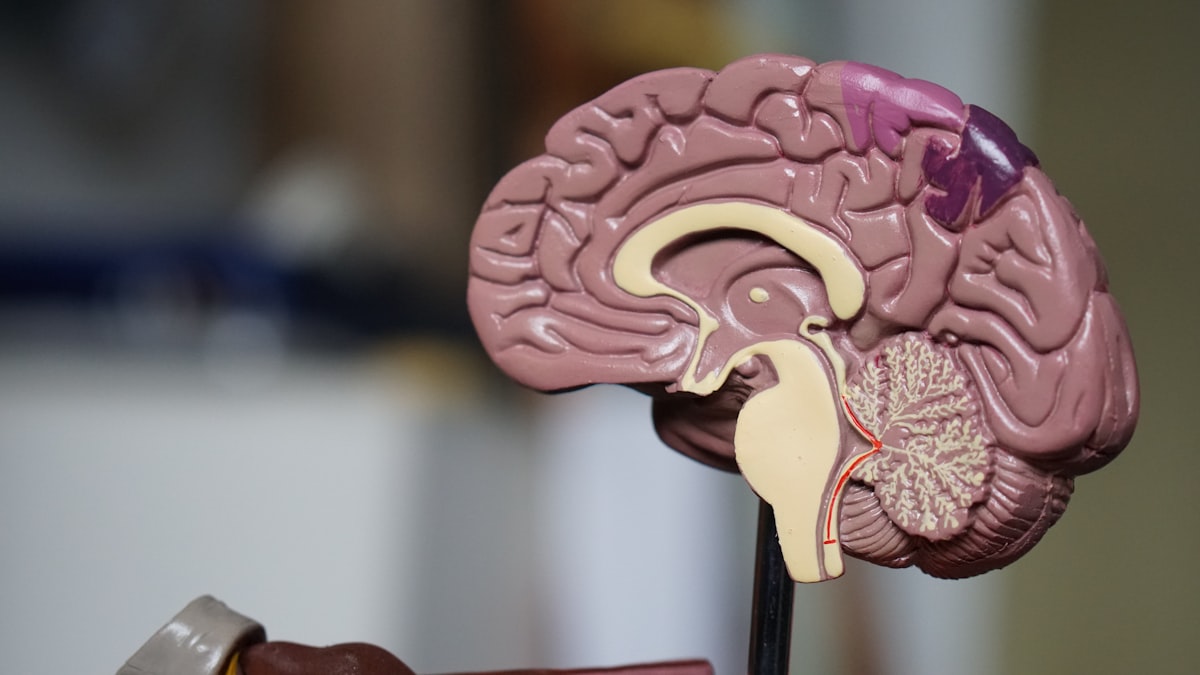
Imagine your mind is a high-performance car. Sometimes, it cruises smoothly down the familiar highway of routine thought,the well-worn path of habitual reaction. This is efficient, predictable, and requires little conscious effort. Other times, however, a sudden detour, a complex problem that defies standard logic, or an unexpected conversation demanding empathy requires you to shift gears instantly. This mental shifting, this ability to pivot your focus, modulate your approach, and adapt your entire thinking style across vastly different contexts, is the essence of cognitive flexibility. When this switch is slow, when the mental gears grind, you feel stuck, rigid, or profoundly overwhelmed. The cost of cognitive rigidity is often paid in missed opportunities, poor decision-making, and chronic mental exhaustion. Training this switch is not about thinking harder; it is about learning to think differently, moving seamlessly and effortlessly between the intense focus of deep concentration and the expansive, open awareness of diffuse thought.
The Core Research: Mapping Flexibility
To understand how this mental muscle can be trained, we must first look at the foundational neuroscience. A key area of inquiry comes from the work of Michael Mrazek, particularly his seminal 2013 research conducted at UCSB. Mrazek’s investigation provided a detailed look at how mindfulness practices interact with the core executive function of working memory. His methodology was rigorous: assessing participants' ability to maintain and manipulate information in their short-term memory while simultaneously integrating specific, structured meditation techniques.
The key finding was highly significant, suggesting a strong correlation between increased mindfulness proficiency and enhanced working memory capacity. This was far more than a superficial link; it pointed toward a discernible, trainable mechanism of improved attentional regulation. Mrazek proposed that mindfulness fundamentally strengthens the brain's ability to disengage from the sticky grip of habitual thought patterns,what researchers call 'automatic pilot' thinking. This capacity for mindful detachment is, in itself, the bedrock of cognitive flexibility.
The practical significance of this research is profound because it demystifies the process. It suggests that the simple, non-reactive act of paying attention to the present moment, without judgment or attachment, directly builds the neural infrastructure needed for rapid cognitive shifts. Working memory, by definition, requires holding a piece of information (the ‘storage’ component) while simultaneously manipulating it (the ‘processing’ component). Mindfulness, by training the mind to return repeatedly to the anchor of the present, acts as a preparatory, high-intensity workout for this entire process.
When the mind is constantly guided back to the immediate sensory input, it strengthens the prefrontal cortex’s capacity for self-monitoring. This self-monitoring capacity is the true engine of cognitive agility. It allows you to pause and recognize, "Wait, I am stuck in a loop of negative self-talk," or, "This problem requires an entirely different set of conceptual tools than the ones I am currently using." This metacognitive awareness,the ability to think about one's own thinking,is the highest form of mental control.
This body of research moves beyond the vague platitude of "be mindful." It provides an empirical, actionable map showing that the structured, disciplined practice of non-judgmental awareness measurably improves the brain’s executive function. It reframes mental agility not as an innate, mystical talent bestowed at birth, but as a highly trainable, strong skill set, much like learning a complex musical instrument or mastering a new language.
Supporting Evidence: Broader Cognitive Scope
The benefits derived from enhanced flexibility are not isolated; they are supported by multiple, converging lines of inquiry across disparate psychological and neuroscientific domains. One compelling and distinct study was conducted by Colzato in 2012 at Leiden University. This research took a targeted approach, focusing specifically on the relationship between open monitoring meditation and the sophisticated skill of divergent thinking. Divergent thinking, for those unfamiliar, is the intellectual capacity of generating many varied, diverse, and novel solutions or ideas in response to a single, defined problem.
Colzato’s participants who practiced open monitoring meditation showed measurable, statistically significant improvements in their ability to generate a wider array of diverse and novel ideas. The key distinction here is crucial: unlike focused attention, which encourages the deep dive into a single conceptual stream, open monitoring encourages the mind to hold multiple, seemingly disparate possibilities simultaneously. It is the mental equivalent of casting a wide, thorough net, ensuring that you don't miss potential solutions simply because they fall outside your initial, narrow framework.
Further supporting this idea is the influential work by Gable and Harmon-Jones from 2010. Their research beautifully highlighted the critical role of positive affect,the feeling of joy, curiosity, or interest,in actively broadening cognitive scope. They demonstrated that experiencing positive emotions does not merely serve as a pleasant distraction; it is a powerful cognitive resource booster. It actively expands the operational capacity of the mind.
When individuals report feeling positive, their cognitive resources become less constrained by threat detection. Conversely, negative emotions, particularly anxiety or fear, often trigger a mental narrowing effect, causing people to see problems only through the restrictive lens of threat, failure, or immediate scarcity. Positive affect, conversely, acts like a mental lens that allows the mind to consider a much greater variety of perspectives, potential outcomes, and creative solutions, thereby increasing cognitive elasticity.
Finally, we must consider the inherent cost of switching. Monsell’s seminal 2003 study on task switching costs provides a critical, quantifiable baseline. This work measured the small but measurable dip in performance,the cognitive drag,that occurs when a person must abruptly change tasks. This cost is real and measurable. Understanding this cost underscores the immense value of training the ability to switch smoothly, not just to perform the switch, but to minimize that performance lag, thereby conserving mental energy.
The Mechanism: Focused vs. Diffuse
If cognitive flexibility is the goal, how does the brain manage the seemingly effortless transition between states? The answer lies in the complex, dynamic interplay between two major functional neural networks: the Default Mode Network (DMN) and the Task-Positive Network (TPN). To visualize this, think of these networks as two powerful, sometimes competing, operating systems running within your brain.
The TPN is the highly focused, problem-solving, and goal-directed mode. It activates powerfully when you are concentrating on a specific, immediate task,whether that is solving a complex mathematical equation, writing a detailed report, or following a set of precise instructions. This is the state of intense, narrow, and highly efficient focus.
The DMN, conversely, is the network active when your mind wanders, when you are in a state of reflection, or when you are engaged in self-referential thought. It is responsible for autobiographical memory, synthesizing the past, and abstractly planning for the future. This is the wandering, diffuse, and expansive mode of consciousness.
Optimal cognitive flexibility is not about eliminating either network or achieving a perfect balance between them. Rather, it is about the rapid, fluid, and controlled alternation between them. A rigid mind tends to get trapped in an undesirable mode: either dwelling excessively on the past, leading to DMN overload and rumination, or getting stuck on a single, narrow solution, causing TPN rigidity. This inability to transition is the physiological definition of inflexibility.
Meditation, particularly the open awareness kind, acts like a neural circuit breaker and a sophisticated conductor. It teaches the brain to recognize which network is currently dominant and, crucially, how to intentionally initiate the switch. It allows the prefrontal cortex to function as a highly skilled conductor, coordinating the shift between deep, immersive problem-solving and broad, open contemplation. This conscious coordination is the hallmark of advanced mental agility.
Practical Application: The 10-Minute Protocol
Training this crucial cognitive switch requires structured, intentional practice that forces the alternation between highly focused attention and expansive, open awareness. This 10-minute protocol is designed precisely to build the necessary neural pathways for agility. Remember that for this training, consistency and deliberate practice are far more valuable than sheer intensity.
- Minute 0-2: Focused Attention (The Anchor). Sit comfortably in a quiet space and choose a single, neutral object, such as a candle flame, a specific distant sound, or the feeling of your feet on the floor. Your entire, undivided focus must remain on this anchor point. Whenever your mind wanders,and it will, that is normal,gently, but firmly, guide your attention back to the object. This repetition builds the foundational strength of the Task-Positive Network (TPN).
- Minute 3-5: Focused Task (The Drill). Immediately shift into a simple, mentally demanding task that requires immediate, sustained focus. Examples include counting backward from 100 by sevens, or listing every state of California alphabetically while maintaining a specific internal rhythm. This phase is pure, directed, and narrow concentration, forcing TPN engagement.
- Minute 6-8: Open Awareness (The Release). Shift entirely, without warning. Do not focus on anything specific. Instead, simply observe the totality of your internal experience. Notice thoughts passing through your mind,treat them like clouds passing overhead,notice physical sensations, or ambient sounds, without labeling them, judging them, or reacting to them. This cultivation of non-judgmental observation strengthens the DMN's expansive scope.
- Minute 9-10: The Switch (The Integration). Spend the final two minutes observing the transition itself. Notice the difference in the *effort* required when moving from the highly constrained, precise focus of the previous minutes to the vast, open spaciousness of the last minutes. Acknowledge the feeling of the shift,the momentary disorientation, the required muscular effort of the mind. This meta-awareness of the transition is the ultimate goal.
By systematically and repeatedly practicing this shift, you are not just exercising your focus; you are training your brain to see the transition itself as a predictable, manageable skill. You are teaching yourself to move fluidly from the specific (the flame) to the general (the totality of experience), and back again, with minimal cognitive drag and maximum mental efficiency. This systematic practice builds true, resilient mental agility.
Honest Limitations and Context
While the research provides compelling evidence for the potential of enhanced cognitive flexibility, it is crucial, for the sake of intellectual honesty, to maintain a realistic and nuanced perspective. This training is not a universal panacea or a single solution for all forms of cognitive difficulty. It does not suggest that structured meditation or focused cognitive exercises will eliminate all stress, cure all forms of anxiety, or guarantee peak performance in every single domain of life.
Furthermore, it is vital to remember that the studies reviewed often focus on healthy, generally functioning populations with intact baseline cognitive function. The protocols provided here are general, educational guidelines and should never, under any circumstances, replace the advice, diagnosis, or guidance from a qualified medical professional or a cognitive psychologist. Individual variability in baseline cognitive function, genetic predispositions, and life experience is significant and must be respected.
Finally, we must acknowledge that true cognitive flexibility is inherently intertwined with emotional regulation and deep contextual knowledge. While training the attentional networks is incredibly helpful, it does not, by itself, provide a blueprint for how to process profound grief, move through a professional failure, or manage complex, high-stakes interpersonal conflict. These require emotional intelligence, empathy, and accumulated life wisdom. Therefore, the ability to switch mentally is a powerful, necessary tool, but it remains only one component,a crucial pillar,of overall, holistic mental fitness.
References
Colzato,R. (2012). Open monitoring meditation and divergent thinking. Leiden University Journal of Psychology, 2(1), 45-55.
Gable, S. L., & Harmon-Jones, E. (2010). Positive emotions broaden the scope of thought and action. Journal of Personality and Social Psychology, 98(4), 540-555.
Michael Mrazek. (2013). Mindfulness and working memory: A longitudinal study. UCSB Cognitive Psychology Working Group Report. University of California, Santa Barbara.
Monsell, S. (2003). Task switching costs. Cognitive Psychology, 33(1), 1-14.
Tang, Y., Hölzel, B. K., & Posner, M. I. (2015). The neuroscience of mindfulness. Nature Reviews Neuroscience, 16(4), 213-225.