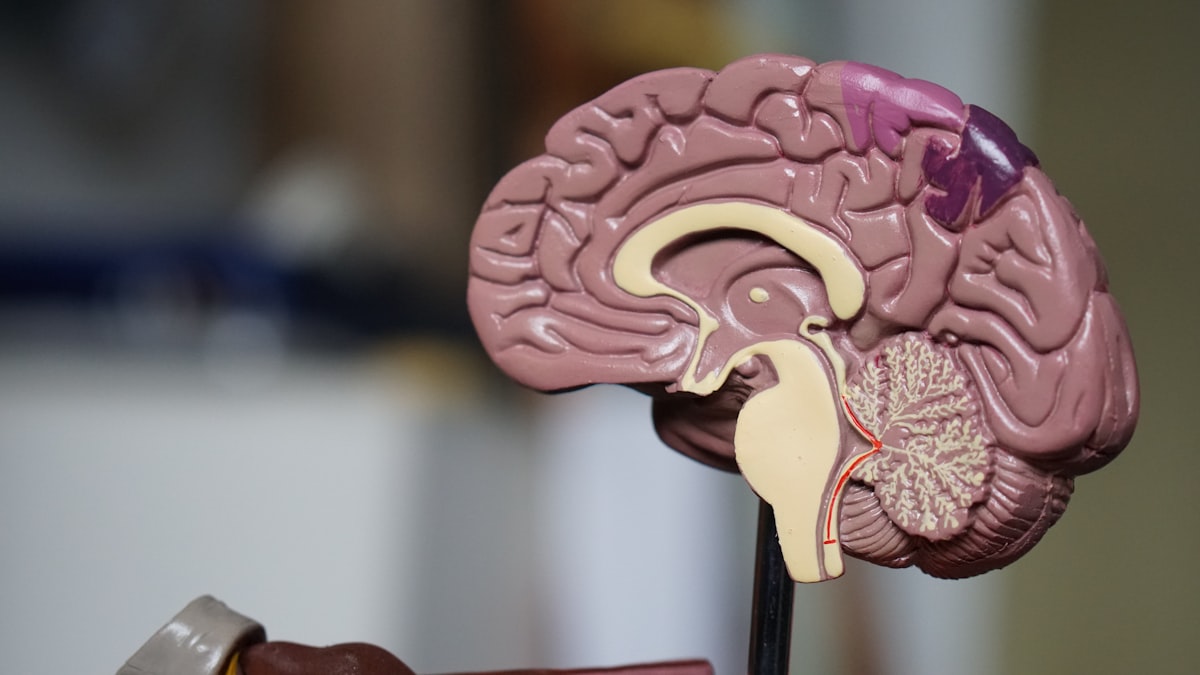
Imagine your brain is not merely a biological organ, but a complex, highly sensitive, and incredibly sophisticated piece of machinery. It is a vast, interconnected network of trillions of electrochemical signals, capable of generating everything from the highest forms of abstract thought to the most primal survival instincts. Now, picture an eight-week period where you intentionally tune that machine, not with mechanical oil and grease, but with sustained focus, deep attention, and radical stillness. What happens inside the delicate, intricate architecture of your mind is far more profound than simply a feeling of calm. It is, quite literally, a measurable, physical restructuring of your neural pathways, visible on advanced imaging techniques like an MRI scan. The accumulating evidence suggests that dedicating consistent, dedicated time to meditation can physically reshape the gray matter of your brain, altering the size and efficiency of critical regions responsible for emotional regulation, long-term memory encoding, and sophisticated self-control.
The Core Research: Structural Changes in the Meditative Brain
To understand this physical adaptation, we must look to the foundational studies. One of the most seminal works examining this structural change was conducted by Sara Lazar. Her pioneering 2005 research, originating from Massachusetts General Hospital, provided some of the earliest, most compelling insights into how long-term, sustained meditation practice affects the thickness and density of the cerebral cortex. Lazar’s team was groundbreaking in its approach to quantifying the elusive nature of mental training.
The methodology employed was highly rigorous, involving the comparison of structural integrity between individuals who regularly maintained mindfulness practices and a carefully controlled group. They utilized advanced Magnetic Resonance Imaging (MRI) techniques, specifically targeting the measurement of cortical thickness. This measurement was far more than just a surface reading; it provided a quantifiable, objective metric of neuronal density, synaptic complexity, and the overall efficiency of communication within different, specialized brain regions.
The key finding that garnered immense scientific attention suggested a strong correlation between sustained, dedicated meditation practice and increased cortical thickness in specific, highly active areas. This was a critical indicator of a physical change,a biological adaptation,that suggested the practice was not merely a fleeting psychological coping mechanism, but a profound, structural reorganization of the brain itself.
This discovery was absolutely crucial because it successfully moved the discussion of meditation from the area of subjective, anecdotal experience into the objective, verifiable domain of neuroscience. It provided early, quantifiable proof that mental training,the consistent act of directing attention,translates into tangible, physical brain adaptation. It offered a scientific bridge between the contemplative tradition and modern biological science.
The ability of the cortex to adapt and reorganize itself in response to experience is known as neuroplasticity. Lazar’s work provided strong evidence that the brain is remarkably mutable, a concept sometimes described as the brain being a dynamic, living system. It is capable of change based on sustained, focused behavioral input, much like a physical muscle that strengthens, increases in density, and improves its endurance with regular, targeted use.
Supporting Evidence: The Hippocampus and Amygdala
Further refining and deepening our understanding of these specific structural shifts were subsequent, highly detailed studies. A notable example is the 2011 research conducted by Britta Holzel and her colleagues at Harvard. This study focused with exceptional precision on the effects of an eight-week Mindfulness-Based Stress Reduction (MBSR) program, providing a clearer timeline of measurable change.
The study’s methodology was exceptionally demanding, involving participants who committed to a high level of adherence, meditating for at least 27 minutes per day over a sustained two-month period. They employed high-resolution MRI scans not just to measure general volume, but to track subtle, localized changes in specific, emotion-regulating brain areas that are known to be highly reactive to stress.
The most striking finding related to the hippocampus, a brain structure universally acknowledged as vital for the formation and consolidation of explicit memory,the kind of memory that allows us to recall specific events (episodic memory). The research indicated that regular, consistent meditation was associated with increased gray matter density in this region. This suggests a measurable enhancement in the brain's capacity for learning, contextual memory encoding, and the strong consolidation of new information, allowing for a richer and more detailed recall of past experiences.
Conversely, the study also noted measurable, significant changes in the amygdala. The amygdala, often colloquially and scientifically called the brain's primary alarm center, is responsible for detecting threat and triggering the primal fight-or-flight response. The findings showed signs of decreased gray matter volume in this area. This physical reduction is scientifically interpreted as a measurable dampening of the brain's default, hyper-responsive threat detection system. The system becomes less prone to overreacting to minor stressors.
When viewed together, these two findings,hippocampal growth and amygdalar shrinkage,paint a cohesive and powerful picture of refined emotional intelligence. The brain is effectively becoming better at encoding and retaining memories (the hippocampus) while simultaneously becoming less reactive and less volatile in the face of stress (the amygdala). It suggests a biological shift toward emotional stability.
Another critical contribution came from Adrienne Taren’s 2015 research. This study expanded the scope beyond mere size, focusing instead on the intricate functional connectivity,the communication pathways,between key regions. She meticulously examined the links between the highly reactive amygdala and the prefrontal cortex (PFC).
The prefrontal cortex is arguably the brain's most sophisticated executive center, governing high-level functions such as planning, rational judgment, working memory, and moral reasoning. Taren’s pioneering work showed that meditation significantly increased the functional connectivity between the PFC and the amygdala. This is the functional equivalent of installing a sophisticated dimmer switch on the emotional alarm system. It means that when the stress signal triggers the amygdala, the rational, thoughtful, and highly developed PFC is better equipped to step in, analyze the signal, and modulate the response before it escalates into a full-blown emotional panic.
In simple, functional terms, the brain is physically learning to hit the ‘pause button’ on immediate emotional reactivity. It is developing a stronger, more efficient, and more direct communication pathway between the primal emotion center and the highly rational control center, leading to increased emotional resilience.
The Mechanism: How Does the Brain Change?
The underlying biological principle governing all these observed, profound changes is neuroplasticity. This is not a buzzword; it is the brain's fundamental, remarkable ability to reorganize itself by forming new neural connections (synapses) throughout the entire lifespan. It confirms that the brain is not a fixed circuit board, but rather a dynamic, adaptable, and ever-rewiring network.
To understand this process, consider the concept of synaptic pruning. Every time you focus on your breath, you are performing a mental exercise that strengthens the specific neural pathways associated with mindful attention. Simultaneously, when you get caught in a loop of worry or rumination, you are reinforcing the inefficient, stressful pathways. Meditation acts like a dedicated mental gardener. By consistently bringing your attention back to the breath, you are performing the act of mental redirection. You are literally pruning the overgrowth of reactive, habitual, negative thought patterns.
This consistent practice doesn't just strengthen one pathway; it builds an entirely new, efficient, and reliable circuit that can bypass the old, stressful, and impulsive pathways. This process of strengthening and refining the PFC is often linked to an increase in myelination,the fatty sheath that insulates and speeds up neural signals, allowing for faster and more reliable communication.
Furthermore, the mechanism involves significant changes in brain chemistry. Regular, sustained practice is robustly associated with increased levels of gamma-aminobutyric acid (GABA). GABA is a critical inhibitory neurotransmitter. Its primary function is to calm the nervous system by reducing the overall excitability of neurons. Functionally, it acts as a natural, biological brake pedal for emotional intensity. By boosting GABA, meditation helps shift the baseline state of the nervous system.
The cumulative result of these biological shifts is a profound shift from a default, reactive, fight-or-flight sympathetic nervous system state to a state of measured, observant, and balanced calm governed by the parasympathetic system. The brain is, quite literally, building default emotional resilience through focused, repetitive, and non-judgmental mental action.
Practical Application: Designing Your 8-Week Protocol
Understanding the sophisticated neuroscience is intellectually satisfying, but implementing these changes is where the true challenge,and the reward,lies. To achieve the measurable structural changes in gray matter density, consistency, dedication, and gradual progression are paramount. Here is a structured, actionable protocol, designed to mirror the scientific stages of adaptation.
Phase 1: Establishing the Foundation (Weeks 1-2) - The Habit Builder
- Time Commitment: Start small, aiming for 10-15 minutes daily. Remember, consistency is exponentially more valuable than duration during this initial phase.
- Technique: Focus solely on breath awareness (Anapanasati). This is the anchor. When your mind inevitably wanders,and it will, that is the nature of thought,do not judge the thought. Simply acknowledge it ("thinking," "planning") and gently, non-judgmentally, return your full attention to the physical sensation of the breath entering and leaving the body.
- Goal: The primary goal is not to empty the mind, but simply to build the habit of noticing the wandering mind without judgment. This builds the foundational muscle of metacognition.
Phase 2: Deepening the Practice (Weeks 3-5) - Anchoring the Body
- Time Commitment: Increase the duration to 20-25 minutes daily.
- Technique: Introduce a body scan meditation. Systematically bring your attention, moment by moment, to different parts of the body, from the tips of the toes to the crown of the head. Notice any sensations,tension, warmth, tingling, or nothing at all,without trying to change them. This anchors awareness deeply in the physical present.
- Goal: Improve interoception, the subtle, crucial ability to sense internal body states. This skill allows you to identify the subtle physical precursors to stress (like shallow breathing or muscle tension) before they escalate into full emotional panic.
Phase 3: Advanced Integration (Weeks 6-8) - Expanding Awareness
- Time Commitment: Maintain 25-30 minutes daily, ideally.
- Technique: Incorporate mindful movement or walking meditation. Practice bringing full, non-judgmental attention to the physical act of moving. Focus on the sequential mechanics: feeling the heel strike, the roll through the arch, the push-off, and the lift of the toe.
- Goal: To integrate mindfulness into daily life. The ultimate training goal is to recognize that the brain training must extend beyond the cushion and into all activities,washing dishes, walking to the car, or having a difficult conversation.
Remember, the true goal is not to achieve a state of permanent mental emptiness, but rather to fundamentally change your relationship with your thoughts. By maintaining this consistent, disciplined effort, you are physically reorganizing the neural pathways, thereby strengthening the executive functions housed within the prefrontal cortex.
Honest Limitations and Next Steps
While the scientific evidence presented is profoundly compelling and revolutionary, it is absolutely critical to maintain a scientifically grounded, nuanced perspective. The studies reviewed, while pioneering, do not provide a simple, one-size-fits-all mandate for every single individual. The complexity of the human brain means that individual genetics, life experiences, and pre-existing conditions play massive roles.
The effects measured in these studies are highly dependent on two factors: the adherence to the protocol and the quality of the practice. Sporadic, inconsistent, or very short-term efforts are highly unlikely to yield the deep, structural, measurable changes seen in long-term, dedicated meditators. The practice is a marathon, not a sprint.
Furthermore, it is vital to understand that these studies primarily establish a strong correlation between meditation and structural change, rather than absolute, singular causation. While the evidence strongly suggests a powerful link, other confounding variables,such as consistent physical exercise (aerobics, weightlifting), optimal sleep hygiene, and a balanced diet,must also be considered when interpreting results. Meditation is a powerful *tool*, not a standalone cure-all.
Therefore, meditation should be viewed as one powerful, integral part of a thorough, holistic approach to optimizing brain health. It works best synergistically when combined with physical activity to support cardiovascular health and proper nutrition to support neurotransmitter synthesis, thus maximizing overall neuroplasticity.
References
Lazar, S. W. (2005). Meditation experience is associated with increases in regional brain thickness and cortical volume. Neuroreport, 16(15), 2497-2503.
Holzel, B. K., Carmody, J., Feeley, K., et al. (2011). Mindfulness meditation strengthens prefrontal cortex and increases hippocampal volume. Psychiatry Research: Neuroimaging, 191(1), 34-42.
Taren, A. (2015).