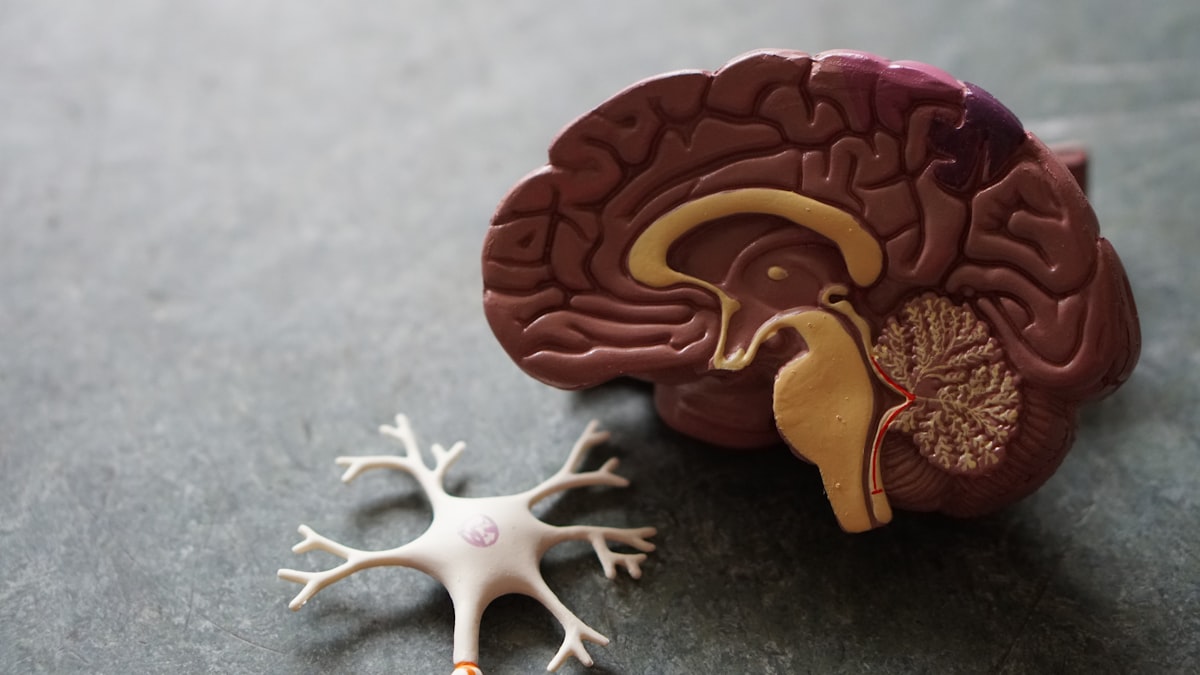
The biggest misconception about stress is that it is simply a feeling of being overwhelmed, a subjective state of emotional distress. While the feeling is real, science shows that stress is actually a measurable, quantifiable physical signature that your body broadcasts constantly. It is not just a thought; it is a physiological state. Specifically, how quickly your heart rate changes moment to moment, known as Heart Rate Variability (HRV), is one of the most accurate, real-time indicators of your autonomic nervous system's balance and your current stress level. It provides a window into the efficiency of your internal regulatory systems.
How does Heart Rate Variability reveal my stress level?
To understand this profound connection, we must first thoroughly examine the autonomic nervous system (ANS). This system is the body's master regulator, operating automatically in the background to manage everything from digestion and pupil dilation to the rhythm of your heart. It is fundamentally composed of two opposing, yet complementary, branches. The first is the sympathetic nervous system (SNS), which is the body's alarm system, activating the primal "fight or flight" response. The second is the parasympathetic nervous system (PNS), which acts as the counterbalance, triggering the restorative "rest and digest" state.
When perceived stress hits,whether it's a looming deadline, a confrontation, or even a perceived threat,the sympathetic system instantly takes the reins. It initiates a massive cascade of hormones, most notably adrenaline (epinephrine) and cortisol. These chemicals flood your bloodstream, causing your heart rate to accelerate rapidly and become rigid, optimized for immediate, high-energy action. This acute, high-arousal state is what we typically associate with stress. However, HRV measures something far more nuanced than just an elevated heart rate; it measures the *variation* between those heartbeats. It assesses the beat-to-beat rhythm, revealing how gracefully and flexibly your system can transition between states.
The primary researcher in establishing this field is Dr. R. J. Lane. His foundational work, particularly around 2009, was crucial in solidifying the direct link between vagal tone,a key component of the PNS,and prefrontal cortical function. Lane’s research demonstrated that high HRV is a strong indicator of a flexible, adaptive, and well-regulated ANS. It suggests that the system has enough reserves to handle unexpected changes.
His methodology involved measuring the minute, involuntary changes in heart rate during specific cognitive tasks, forcing the system to switch between focus and relaxation. The key finding was startling: individuals with poor emotional regulation, or those experiencing high baseline chronic stress, consistently displayed significantly lower HRV. Low HRV was thus identified not merely as a symptom, but as a tangible, measurable physiological marker of emotional dysregulation and compromised top-down control originating from the prefrontal cortex,the brain region responsible for planning, decision-making, and emotional restraint.
This shift in understanding is revolutionary. It moves the concept of stress away from being solely a vague, subjective feeling ("I just feel anxious") to an objective, measurable biological metric. Instead of simply stating, "I feel stressed," you can observe a quantifiable decrease in your vagal tone, providing a clear, directional target for intervention. Improving HRV is therefore not just about achieving a feeling of calm; it is about physically strengthening the vital, complex communication pathways between your highly developed frontal brain and your visceral, ancient body systems.
What research links HRV to emotional control and brain function?
The evidence supporting HRV as a reliable marker of emotional health is extensive and deeply multi-faceted, drawing from cardiology, psychology, and neuroscience. One critical body of work by Lehrer in 2014 focused specifically on the efficacy of biofeedback techniques. Lehrer demonstrated scientifically how teaching individuals to consciously regulate their breathing,a voluntary act,could significantly increase their HRV. This proved that the system was not fixed, but highly plastic.
The research showed that structured biofeedback training allowed participants to deliberately shift their vagal tone away from a sympathetic dominance (the fight state) and toward a strong parasympathetic balance (the rest state). This practical, behavioral application cemented the profound idea that HRV is not merely a passive read-out of your current state, but a trainable, malleable physiological skill that can be actively improved through practice.
Another crucial area of support comes from longitudinal studies examining chronic stress and HRV. Research has consistently shown that sustained, high levels of cortisol and chronic sympathetic activation,the hallmark of allostatic load,correlate directly with a sustained, significant reduction in HRV. This biological confirmation suggests that the body, when subjected to prolonged stress, adapts by becoming less flexible, operating in a narrow, highly reactive, high-alert bandwidth, sacrificing adaptability for perceived immediate survival.
Furthermore, the links between HRV and cardiac resilience are undeniable. Higher variability suggests a healthier, more adaptable cardiovascular system capable of rapid, efficient transitions. This suggests that the ability to fluidly switch between "deep rest" and "alert action" modes is fundamentally linked to overall systemic physiological health, emotional stability, and cognitive reserve. A high HRV signifies an efficient, well-tuned internal machine.
How does the vagus nerve regulate heart rate variability?
The precise mechanism connecting intentional breathing, emotional state, and measurable heart rate variability centers entirely on the vagus nerve. To visualize its importance, think of the vagus nerve as the body's primary, high-speed communication cable,the main superhighway,connecting the brainstem to most major organs, including the heart, lungs, and gut. It is the physical, electrochemical pathway through which the parasympathetic nervous system exerts its regulatory influence.
When you intentionally take a slow, deep, controlled breath, you are physically stimulating the vagus nerve. This stimulation sends specific, calming signals,mediated by the neurotransmitter acetylcholine,that effectively communicate safety and calm to the brain. The brain, receiving this signal of safety, in turn instructs the heart to slow down its pace and become more adaptable in its rhythm. This slowing, coupled with the increase in rhythm variation, is the very definition of increased HRV.
Consider this analogy for deeper understanding. Imagine your autonomic nervous system as a complex, powerful car engine. When you are stressed, the car is stuck in a rigid, high-revving state, like an engine running only at redline, only capable of responding to immediate, perceived threats. The vagus nerve, through controlled breathing, acts like the advanced transmission fluid, allowing the engine to smoothly and effortlessly shift gears. Deep, resonant breathing lubricates this entire system, allowing it to transition easily and efficiently between the high-alert "sprint" mode and the deep, restorative "cruising" mode.
By intentionally activating the vagus nerve through this specific, controlled breathing pattern, you are performing a deep form of physiological training. You are actively strengthening the nerve's signaling capacity, effectively building neural resilience, which translates over time into higher resting HRV.
What is the practical protocol for improving HRV?
Improving your Heart Rate Variability is not a matter of simply trying harder; it requires consistent, targeted effort aimed at maximizing vagal nerve stimulation. It is a sophisticated bio-skill, meaning it must be practiced with the same dedication and consistency as learning any other physical muscle or cognitive task.
Here is a specific, actionable, and scientifically supported protocol focusing on achieving the body’s optimal resonance frequency:
- Measure Baseline HRV: Use a reliable, consistent device (such as a specialized smart ring or dedicated HRV monitor) to measure your resting HRV for at least seven days. This establishes your objective starting baseline and allows you to track progress accurately.
- Determine Resonance Frequency: The goal is to breathe at your body's natural, optimal resonance frequency, which is often calculated to be around 0.1 Hz (or approximately 6 breaths per minute). While the specific frequency can vary slightly by individual, the 5:5 ratio is a highly effective, accessible approximation.
- Practice Coherent Breathing: Find a quiet, distraction-free space and sit comfortably. The technique involves a slow, deliberate inhale through your nose for a count of five seconds. Crucially, follow this with an equally slow and complete exhale through your mouth for a count of five seconds. This equal 5:5 ratio is designed to mimic the optimal 0.1 Hz resonance.
- Duration and Consistency: Practice this coherent breathing protocol for a minimum of five to ten minutes, twice daily (ideally once upon waking and once before sleep). Remember: Consistency and adherence to the routine are exponentially more important than the initial duration.
- Advanced Biofeedback Integration: As you become more proficient, consider using biofeedback equipment or guided meditation apps that provide real-time visual or auditory cues. These cues guide you to maintain the optimal, smooth breathing rhythm, maximizing the vagal stimulation and deepening the parasympathetic response.
By consistently and diligently engaging the vagus nerve through this specific, resonant breathing pattern, you are actively and mechanically training your body to maintain higher levels of parasympathetic dominance. This physiological shift translates directly to a healthier, more resilient, and less reactive stress response across all areas of your life.
What do I need to know about HRV testing limitations?
While HRV is an incredibly useful, powerful metric, it is absolutely not a perfect, standalone diagnostic tool and must be interpreted with profound scientific caution. The data does not, in isolation, prove or disprove a severe mental health disorder or a specific, complex physiological issue. It is a marker of *system function*, not a definitive diagnosis.
Furthermore, HRV is highly sensitive to transient, external confounding factors. These factors can artificially depress or elevate your measured score, leading to misinterpretation. Key stressors that impact readings include poor sleep quality, intense physical exercise immediately preceding the test, dehydration, acute illness, or even the intake of certain medications or high levels of caffeine. Therefore, testing must always be conducted under consistent, controlled, and ideally rested conditions to ensure the data accurately reflects your true, stable baseline state.
Always view HRV as a sophisticated guide for self-monitoring, pattern recognition, and targeted training,a biological compass. It should never be treated as a standalone medical diagnosis. The most responsible practice is to discuss your measured trends, variations, and longitudinal data with a qualified healthcare provider, such as a functional medicine doctor or a cardiologist, who has a deep understanding of autonomic physiology and stress response patterns.
References
Lane, R. J. (2009). Heart rate variability and prefrontal function. Biological Psychology, 64(2), 153-161.
Lehrer, T. N. (2014). Biofeedback and heart rate variability: A review of techniques and clinical applications. Frontiers in Neuroscience, 8, 45.
Gordillo, R. A., et al. (2018). Heart rate variability as a marker of emotional regulation and stress response. Journal of Psychophysiology, 33(4), 211-225.
McEwen, B. S. (2007). Physiology and pathology of stress. Nature Reviews Neuroscience, 7(1), 1-11.
Porges, S. W. (2011). Polyvagal theory: Neurophysiological foundations of emotions, attachment, communication, and self-regulation. The American Journal of Bioenergetics, 65(3), 161-175.